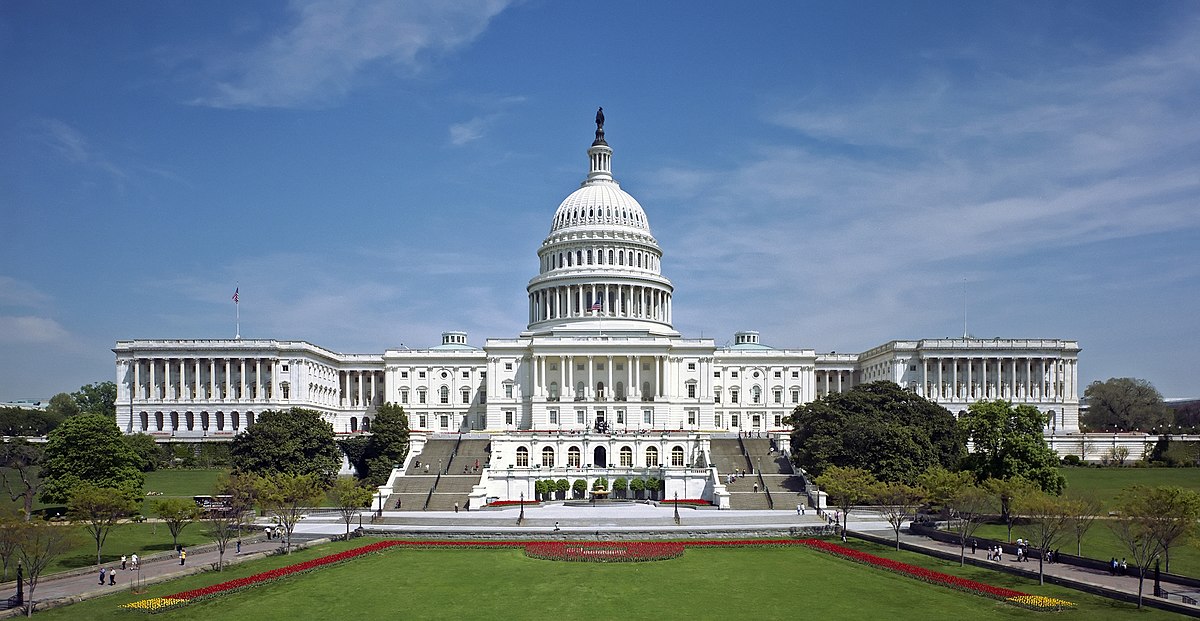
The United States Congress is considering a new resolution that directly calls on President Bola Ahmed Tinubu’s administration to take stronger action in protecting Christian communities and ensuring the safe return of displaced persons across Nigeria.
The resolution, identified as H. Res. 860, was introduced in the 119th Congress on November 4, 2025. It cites persistent attacks by extremist groups such as Boko Haram, the Islamic State West Africa Province (ISWAP), and armed Fulani militias, which have led to mass killings, abductions, and the destruction of churches and communities across the country’s northern and central regions.
According to the document, the U.S. House of Representatives commends former President Donald Trump for redesignating Nigeria as a Country of Particular Concern over religious-freedom violations. The resolution urges the U.S. government to provide humanitarian aid directly to faith-based organizations supporting internally displaced persons, while also conditioning foreign assistance on Nigeria’s commitment to protecting religious minorities, prosecuting perpetrators of violence, and facilitating the return of victims to their ancestral homes. It also recommends targeted sanctions, visa restrictions, and asset freezes against individuals or entities found guilty of promoting or enabling religious persecution including groups such as the Miyetti Allah Cattle Breeders Association and its affiliate, Miyetti Allah Kautal Hore.
The move effectively increases pressure on the Tinubu administration to intensify security operations in Christian-dominated communities and demonstrate greater accountability in addressing religious-based violence. Analysts believe that, while the resolution is not a law binding on Nigeria, it reflects strong U.S. congressional sentiment that could influence diplomatic and financial relations between both nations. It could also lead to the re-evaluation of U.S. aid, trade, and defense cooperation if Nigeria fails to show tangible progress on human-rights and religious-freedom benchmarks.
However, Nigerian authorities have rejected what they call a one sided narrative, insisting that the violence affects both Christians and Muslims, and stems largely from terrorism, banditry, and ethnic conflicts rather than a coordinated religious war. Government officials argue that oversimplifying the crisis into a Christian-versus-Muslim divide could hinder ongoing counter-terrorism and peacebuilding efforts.
The development follows recent tensions after reports that the U.S. military under Donald Trump’s directive had drawn up contingency plans for strikes in Nigeria, citing alleged persecution of Christians. With the new resolution, Washington appears set to maintain firm pressure on Abuja over religious-freedom concerns.
The U.S. House Foreign Affairs and Judiciary Committees are expected to review the resolution in the coming weeks. If adopted, it would mark one of the strongest congressional statements yet on Nigeria’s internal security and humanitarian crisis, potentially shaping the future of U.S.–Nigeria relations.